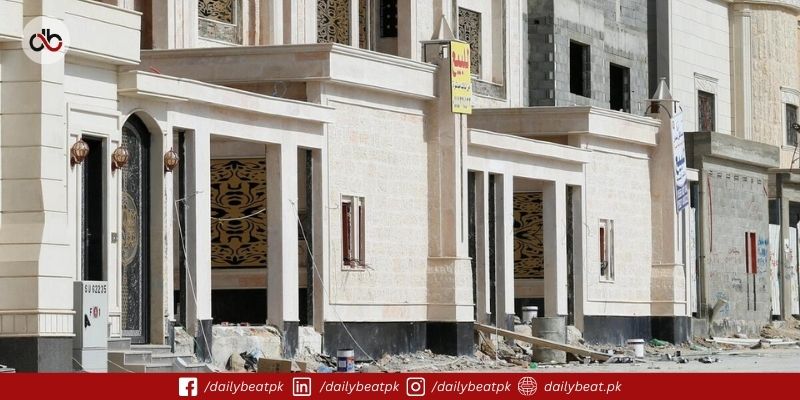
Saudi Arabia has issued new regulations for shared housing facilities across the Kingdom, setting capacity limits and stricter safety requirements.
The Ministry of Municipalities and Housing announced the rules, which apply to residential buildings, large housing complexes, and mobile cabins. The measures aim to prevent overcrowding and improve living conditions for residents.
Under the regulations, residential buildings may accommodate up to 500 people, with a Saudi national assigned to manage operations. Each resident must have at least four square metres of space, and no room can house more than 10 occupants.
Large residential complexes will be allowed to host up to 10,000 residents under the same space requirements. Additional facilities are mandatory, including prayer rooms, an emergency room for every 1,000 residents, and a medical clinic for every 5,000 residents.
Mobile cabins, typically used near large projects, must meet occupancy limits and provide central kitchens, health isolation rooms, prayer spaces, laundry areas, clinics, and climate control systems.
All shared housing types must secure prior approval from authorities, including building permits and public health and safety plans. Essential amenities such as kitchens, bathrooms, laundry rooms, potable water, climate control, pest control, and cleaning services are required.
The regulations also mandate safety measures, including fire detection systems, emergency exits, first-aid kits, and accessibility features for people with disabilities.
Urban planning provisions restrict built-up areas to 40% of the land plot. Facilities must include fuel stations, electric vehicle charging points, shaded parking, recreation spaces, and modern lighting. Parking rules require one car space for every 100 residents, bus parking for half the population, and dedicated spaces for people with disabilities.
Construction guidelines cover safe stair railings, window height compliance, roof barriers, rainwater drainage, and waste disposal systems. Certain features are prohibited, such as boundary walls along commercial streets and the placement of air-conditioning units or satellite dishes on balconies.
For mobile cabins, durable steel or aluminium frames, insulated walls, anti-slip flooring, and pitched roofs are required. They must be built to withstand frequent relocation and heavy use.
The Ministry stated that the rules are designed to ensure the safety, health, and comfort of residents. Authorities will monitor compliance and enforce penalties for violations.