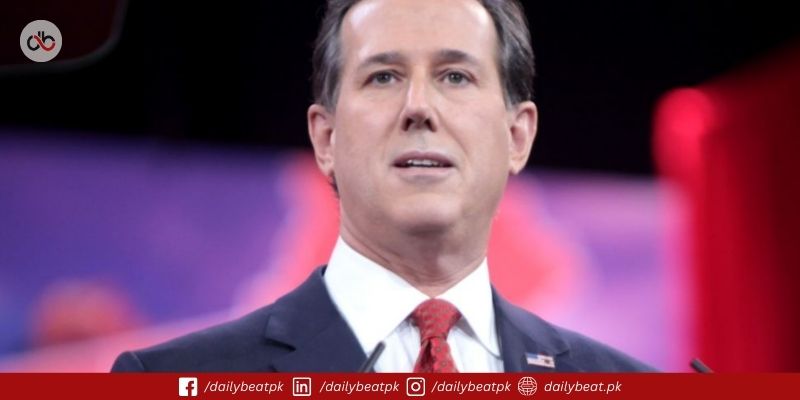
Rick Santorum is a well-known American politician, attorney, author, and former CNN political commentator. Over the years, he has built a reputation as a strong conservative voice in U.S. politics. He served in the U.S. Senate for more than a decade and later became a two-time Republican presidential candidate. His career, personal life, and political views continue to spark debate and interest across the country.
This article offers a comprehensive look at Santorum’s biography, family, career, and achievements, with insights that go beyond simple facts.
Early Life and Background
Rick Santorum was born on May 10, 1958, in Winchester, Virginia. His parents, Aldo Santorum and Catherine Santorum, were hardworking people of Italian and Irish descent. He grew up in a Catholic family, a faith that later shaped much of his political identity.
Santorum spent his early years in West Virginia before moving to Pennsylvania, the state that would eventually launch his political career. From a young age, he showed interest in leadership, debate, and public service.
Education and Early Career
Rick Santorum earned his undergraduate degree in political science from Penn State University. He then pursued a Master of Business Administration at the University of Pittsburgh. Later, he attended Penn State Dickinson Law, where he earned his Juris Doctor degree in 1986.
After law school, Santorum worked as a lawyer at Kirkpatrick & Lockhart, a prominent Pittsburgh law firm. His legal background gave him the tools to understand legislation and policy, skills that would help him navigate his future in Congress.
Entry Into Politics
Rick Santorum’s political journey began in the late 1980s. In 1990, he ran for the U.S. House of Representatives from Pennsylvania’s 18th congressional district. Despite being a newcomer, he won against a seven-term Democratic incumbent. His victory reflected the growing Republican momentum at the time.
During his four years in the House, Santorum developed a reputation as a committed conservative, especially on social issues and government spending. His sharp debating skills and ability to connect with voters quickly elevated his profile.
U.S. Senate Career
In 1994, Rick Santorum was elected to the United States Senate from Pennsylvania, defeating Democratic Senator Harris Wofford. He became one of the youngest members of the Senate and gained attention for his strong conservative values.
Key Achievements in the Senate
- Republican Leadership: By 2001, Santorum had risen to the position of Senate Republican Conference Chairman, making him the third-ranking Republican in the chamber.
- Welfare Reform: He was a strong supporter of the 1996 welfare reform law, which placed new requirements on recipients and aimed to reduce long-term dependency.
- Pro-Life Advocacy: Santorum was a vocal opponent of abortion and stem cell research involving embryos. He consistently pushed for pro-life legislation.
- National Security: After the 9/11 attacks, Santorum backed strong national security policies and supported U.S. military actions abroad.
Santorum served two full terms in the Senate but lost his re-election bid in 2006 to Democrat Bob Casey Jr. The loss was seen as part of a broader shift against Republicans in that election cycle.
Presidential Campaigns
Rick Santorum ran for the Republican presidential nomination twice.
- 2012 Campaign: Santorum gained national recognition during the 2012 primaries. He positioned himself as a conservative alternative to Mitt Romney. He won 11 states and finished second overall in delegate count.
- 2016 Campaign: Santorum ran again but struggled to gain traction in a crowded Republican field dominated by Donald Trump. He ended his campaign early and endorsed other conservative candidates.
His campaigns highlighted his strong stances on family values, religious freedom, and traditional conservative policies.
Political Views and Philosophy
Rick Santorum is known for his social conservatism. His political philosophy combines Catholic values with traditional Republican beliefs.
Core Issues He Advocates For:
- Pro-Life Policies: Consistently opposes abortion and promotes pro-life laws.
- Family and Marriage: Advocates for traditional marriage and family-centered policies.
- Faith in Public Life: Believes religion should play an important role in American society.
- Economic Conservatism: Supports tax cuts, reduced government spending, and free-market principles.
- National Security: Emphasizes a strong military and robust foreign policy.
Life After Politics
After leaving the Senate, Rick Santorum stayed active in public life. He became a political commentator on CNN, where he often debated issues from a conservative perspective. He also wrote books, including It Takes a Family, where he discussed his views on family and culture in America.
Santorum has also worked with non-profits and advocacy groups that support pro-life initiatives and family causes.
Rick Santorum’s Family
Family has always played a central role in Santorum’s life. He married Karen Garver Santorum in 1990. The couple has seven children: Elizabeth, Richard, Daniel, Sarah, Peter, Patrick, and Isabella (who passed away in 2022).
The Santorum family is often described as tight-knit and deeply rooted in faith. Their experiences, especially raising a child with a severe genetic disorder, shaped Santorum’s perspective on healthcare and family policies.
Achievements and Legacy
Rick Santorum’s career has had both victories and defeats, but his impact on American politics remains strong.
Major Achievements:
- Served two terms as U.S. Senator from Pennsylvania
- Rose to third-ranking Republican leadership position in the Senate
- Ran competitive campaigns for the Republican presidential nomination
- Became a leading voice for social conservatism in the U.S.
- Authored books that influenced debates on family, culture, and politics
Even after leaving elected office, Santorum continues to shape conservative thought and inspire debates about the role of faith and family in American life.
Conclusion
Rick Santorum’s story is one of persistence, faith, and conviction. Whether people agree or disagree with his policies, his career shows the influence of strong values in politics. He remains a figure who sparks discussion on issues that matter deeply to many Americans, from family life to national security.
By looking at his biography, family, and achievements, we see more than just a politician. We see a man who dedicated his life to shaping the national conversation on morality, government, and culture.