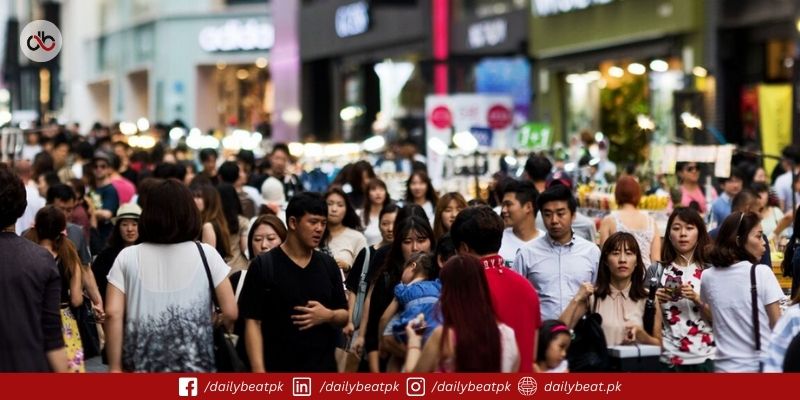
The Korea population is one of the most fascinating demographic stories in today’s world. South Korea, often celebrated for its rapid economic growth, global cultural influence, and technological achievements, is now drawing attention for a different reason. It’s shifting population structure. As of early 2025, the country’s population stands at around 51.8 million people, including roughly 49.8 million Korean nationals and close to 2 million foreign residents.
On the surface, the size of the population appears stable. But when we look closer, we see a dramatic transformation. South Korea has one of the lowest birth rates in the world, one of the highest life expectancies, and one of the fastest-aging societies. These forces together are reshaping the very fabric of Korean society. To fully understand the meaning of these changes, it helps to compare the Korean population to demographic trends in other parts of the world.
A Snapshot of the Korean Population in 2025
South Korea’s population story is striking because of how quickly it has shifted. Just a few decades ago, the country was experiencing strong growth. In the 1960s and 1970s, families were larger, and the country was still developing its modern economy. Today, the opposite is true. Birth rates have plummeted, while life expectancy has risen dramatically. The median age is now close to 45, making South Korea one of the oldest nations on Earth.
Although the total population has held steady in recent years, this stability is misleading. Beneath the surface, South Korea is struggling with declining births and an increasing number of elderly citizens. The slight population growth in recent years has largely been due to immigration rather than natural increase.
Comparing Korea to Global Demographic Trends
South Korea is not alone in facing population challenges, but the speed and severity of its changes stand out. For comparison, the United States has a much younger population. The U.S. benefits from higher fertility rates and steady immigration, keeping its median age around 39. This gives America a larger working-age population relative to its elderly citizens.
However, when we compare Korea to Japan, the similarities become clearer. Japan has been dealing with an aging society and shrinking population for decades, and South Korea now mirrors this trajectory. Both nations have extremely low fertility rates and must cope with the economic and social consequences of declining youth populations.
China is another point of comparison. While China’s population is far larger, it is also beginning to shrink and age. The one-child policy of the past, combined with urban lifestyles, has created a demographic imbalance. South Korea is facing the same problem but on a much smaller and faster scale.
Looking at Europe, several countries also face low birth rates and aging populations. Yet South Korea is unique because its fertility rate has fallen to below 1.0 children per woman, the lowest in the world. This is not just a slow decline; it is a dramatic demographic shift that challenges long-held assumptions about family, work, and society.
Why the Korean Population Is Shrinking
Understanding why the Korean population is shrinking requires looking at social, economic, and cultural factors together. One of the most significant reasons is the extremely low birth rate. Young couples in South Korea are choosing to have fewer children. The cost of raising children, especially education expenses, is extremely high. Housing prices in major cities like Seoul are among the steepest in the world, making it difficult for young families to settle down.
In addition, South Korea’s work culture plays a major role. Long hours, competitive job markets, and limited work-life balance discourage many people from starting large families. Marriage itself is being delayed, and more people are choosing to remain single. These lifestyle choices are increasingly common in other advanced economies, but in Korea, they are especially pronounced.
Government policies have tried to address this issue by offering financial incentives, housing support, and childcare subsidies. Yet so far, these efforts have not reversed the trend. Fertility continues to decline, showing that the problem is more cultural and structural than simply financial.
The Role of Immigration in Korea’s Demographics
A major change in the Korean population in recent years has been the rise of foreign residents. Today, about two million foreigners live in South Korea. This includes migrant workers, international students, professionals, and long-term residents. Immigration is reshaping Korea’s society, creating more multicultural families and adding new cultural influences.
Many of these foreign residents come from nearby countries such as China and Vietnam, but there are also significant numbers from the United States and Europe. While immigration helps to fill labor gaps and slow down the population decline, South Korea still faces challenges in fully integrating its growing foreign population. Unlike traditional immigration nations such as the U.S., Korea has less experience managing large-scale cultural diversity.
South Korea’s Aging Society
The most defining feature of the Korean population is how quickly it is aging. By 2050, it is expected that more than one-third of the population will be over 65 years old. This trend brings several challenges. Economically, there will be fewer working-age adults to support retirees, creating pressure on the pension and healthcare systems. Socially, families will need to adjust to new caregiving responsibilities, and the nation will have to rethink how to support its elderly population.
This rapid aging is not unique to South Korea, but the country’s pace is faster than almost anywhere else. For comparison, the United States has a younger population structure, and while Europe and Japan face similar issues, Korea is experiencing these changes within a shorter timeframe.
Lessons from the Korean Population Trends
What makes the Korea population story globally important is the way it illustrates broader demographic challenges. South Korea shows that once fertility rates drop to very low levels, they are extremely difficult to reverse. Economic growth alone does not guarantee population stability.
Korea is also testing new solutions, from expanding childcare programs to encouraging immigration and investing in automation. The country is experimenting with ways to balance an aging society while maintaining productivity and economic strength. For other nations, Korea provides an early preview of challenges that may eventually spread worldwide.
The Future Outlook of the Korean Population
Looking ahead, the Korean population is likely to decline more noticeably after 2030. The number of elderly citizens will continue to grow, necessitating adaptations in the country’s healthcare, housing, and labor systems. At the same time, immigration may continue to reshape Korea’s cultural landscape, bringing more diversity to a nation that was once very homogeneous.
Technology will play a major role in this future. South Korea is already a global leader in robotics, artificial intelligence, and smart infrastructure. These innovations may offset the shrinking workforce and improve the quality of life for an aging society.
Conclusion: Why the Korean Population Story Matters
The Korean population story is more than just statistics. It is a reflection of how modern societies change under pressure from economics, culture, and global trends. South Korea has moved from rapid growth to population decline within just a few decades. Its experience highlights the challenges of balancing modern lifestyles with traditional family structures, the importance of immigration, and the realities of an aging world.
For people in the United States and other parts of the world, South Korea is a case study in how demographic change can reshape an entire nation. As the global population faces its own shifts, understanding Korea’s story gives us insight into what the future may look like elsewhere.